A Quiet Performance or a Larger One? Two Ways to Read Acting
Quiet or expressive acting can reveal character in different ways. Learn what to watch in a performance before deciding whether its choices fit.
When a character barely moves through a painful scene, is the actor holding something back—or asking you to notice the effort of holding it back? Quiet acting can make small changes carry weight; expressive acting can let emotion arrive in larger, more visible waves. Neither approach is automatically more truthful. To read a performance, watch how its choices shape what the character communicates.
What makes acting quiet or expressive?
Quiet acting tends to concentrate meaning in restrained behavior: a measured voice, a still posture, a glance that stops short of meeting someone’s eyes. The actor may suggest a feeling without displaying it fully. That gap between what the character experiences and what they reveal becomes part of the scene.
Expressive acting makes inner states more outwardly legible. A character might speak with a sharper rhythm, move abruptly, or let grief break into an open sob. The feeling does not have to be loud; expressiveness is about how much of the character’s response becomes visible or audible, not simply about volume.
These are useful ends of a spectrum, not fixed boxes. An actor might play one exchange with careful understatement and then let a later outburst disrupt that control. Even within a single line, a composed face can coexist with a voice that strains. The interesting question is what the shift tells you.
What should you watch for in a performance?
Start with the character’s behavior before naming its style. Notice the voice: Is the speech clipped, flowing, hesitant, or unusually even? Look at the body: Does the character lean closer, keep their hands still, turn away, or take up more space? Then pay attention to timing. A delayed answer can reveal a struggle that a quick reply would conceal.
Compare the character’s behavior with what is happening in the scene. Someone may smile while delivering an apology, or insist they are calm while speaking too quickly to sound calm. That mismatch can suggest self-protection, embarrassment, anger, or deliberate concealment. It does not settle the interpretation on its own, but it gives you something concrete to weigh.
Also notice how the performance changes across the film. A character who usually speaks freely may become painstakingly polite around one particular person. Another may begin guarded and gradually risk more direct expressions of affection. Such contrasts make a style legible: you can see what the character does habitually, and where that habit bends.
Does restrained acting always mean realism?
No. Restraint can feel naturalistic when it fits a character and the film’s wider style, but it can also feel stylized, formal, or deliberately opaque. A steady gaze may suggest composure, defiance, numbness, or a refusal to give another character the satisfaction of a reaction. The performance supplies evidence; the surrounding scene helps you decide among possibilities.
Nor does a subtle gesture automatically carry more meaning than an obvious one. A slight pause can be carefully expressive, while a visible breakdown can be specific and controlled. Calling one “subtle” and the other “overacting” too quickly often skips the more useful question: Does this choice make sense for this character at this moment?
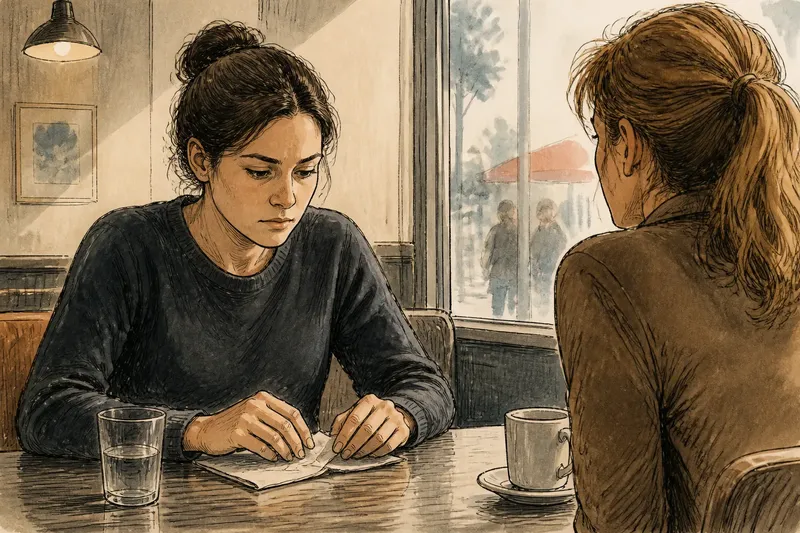
Imagine a fictional scene in which Mara learns that her close friend has hidden a serious mistake. If Mara answers with a quiet “I see” and carefully folds a napkin, the controlled voice and precise movement might suggest that she is containing anger while deciding what to do. If she instead interrupts, raises her voice, and walks out, the same news might register as a rupture she cannot contain. Each approach could fit, depending on how Mara has behaved before and what the scene is asking of her.
How does a performance fit the film around it?
Acting is not heard or seen in isolation. Dialogue, editing, music, camera distance, and the other actors all affect how a performance lands. A close view may make a small tightening around the mouth hard to miss; a scene with quick exchanges may make an even, restrained reply feel pointed. A broad performance may also be the film’s chosen register rather than an attempt at everyday behavior.
Watch how performers respond to one another, not only how they deliver lines. One actor’s stillness can give a partner’s agitation somewhere to break against. Or a character may match another person’s gestures, then stop, making the change feel like a refusal to continue their shared rhythm. These choices make acting relational: a performance can alter the energy of a scene without taking it over.
It can help to separate your reaction from your judgment. “I felt distant from this character” describes your experience. “The performance is too restrained” adds an evaluation that calls for a reason. Perhaps the character’s limited expression obscures a turn that the story needs you to recognize. Or perhaps that distance is precisely what makes the character hard to read.
What questions help you read acting?
What is the character trying to hide?
Look for friction between words and behavior: an easy answer paired with a tightened jaw, or a cheerful greeting delivered without warmth. That friction may point to concealment, though it can also reflect habit or uncertainty.
What changes during the scene?
Track a shift in voice, posture, pace, or willingness to meet another character’s gaze. A small change can mark a decision more clearly than a dramatic display if the performance has established a different baseline.
Does this style fit the character and the moment?
Compare the choice with what the character has shown so far and with the pressures of the scene. An abrupt eruption may feel earned after sustained control, while the same eruption may feel disconnected if the film has not prepared for it.
What does the other actor make possible?
Notice whether one performance invites, resists, or redirects the other. The meaning may live in that exchange rather than in either actor’s most visible gesture.
How can you judge the choice without ranking the style?
Ask whether the performance gives you a coherent way to understand the character, even if the character remains mysterious. Does a change in behavior feel connected to the scene? Does the actor’s rhythm help distinguish this relationship from another? Can you point to the choice that shaped your response, rather than treating “quiet” or “big” as a verdict by itself?
There is little value in counting facial movements or deciding that every emotion must be shown plainly. That turns viewing into a search for proof of feeling, when a character may be trying not to reveal any. Instead, describe what you noticed first, then ask what other reading fits the same detail.
Quiet or expressive acting is best judged through fit, contrast, and consequence. A restrained performance may invite you to infer what a character will not say; a larger one may make a change impossible to miss. The next time a scene holds your attention, identify one specific choice—the pause before an answer, the sudden movement, the voice that stays level—and ask how it changes your reading of the character. That keeps the judgment grounded in what the performance actually does.